Non-stick Pots and Pans
Kitchen King Nonstick Pots and Pans — The Specialist Pieces Every Kitchen Needs
Beyond the everyday karahi, fry pan, and tawa, there's a group of specialist pans that solve specific cooking problems — and this category brings together most of them, each built for a job the others can't do as well.
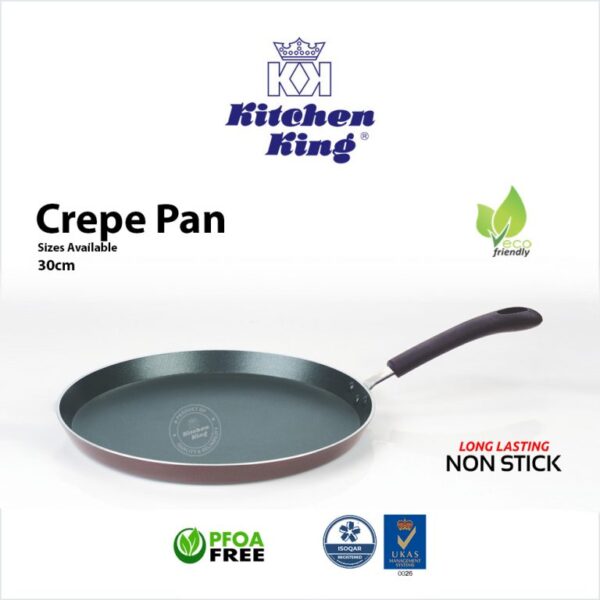
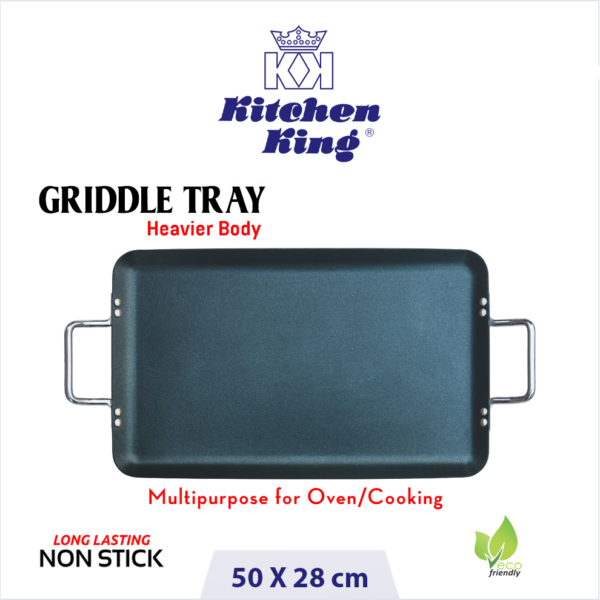
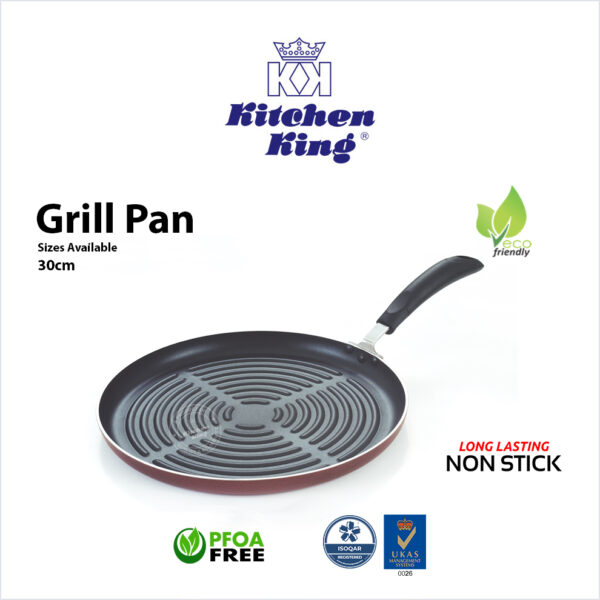
The Crepe Pan has a flat, low-sided surface designed for thin batters — crepes, dosas, and thin parathas that need to spread easily and flip cleanly, without raised sides getting in the way. The Griddle Tray is a large double-burner flat surface, ideal for grilling multiple kebabs, parathas, or sandwiches at once — the kind of surface area a single fry pan can't match. The Grill Pan has a ridged nonstick surface that gives you char-marks and lets excess fat drain away, bringing indoor BBQ-style grilling to a gas stovetop.
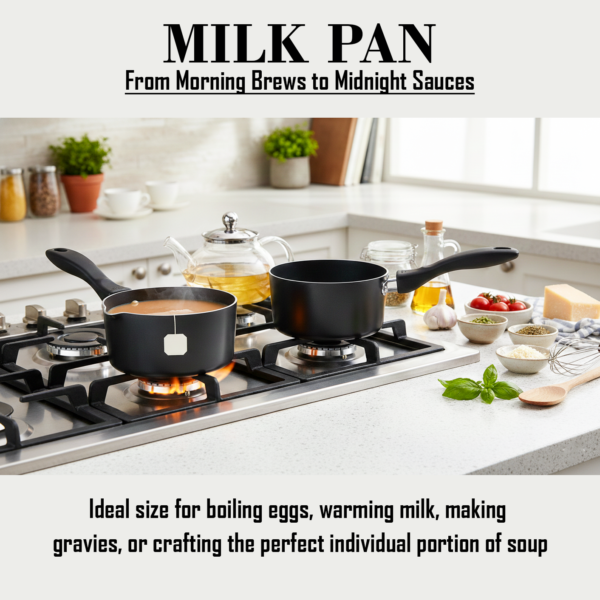
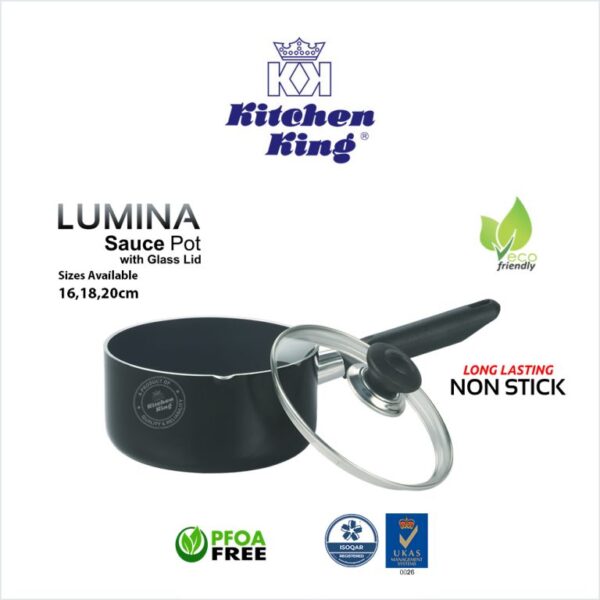
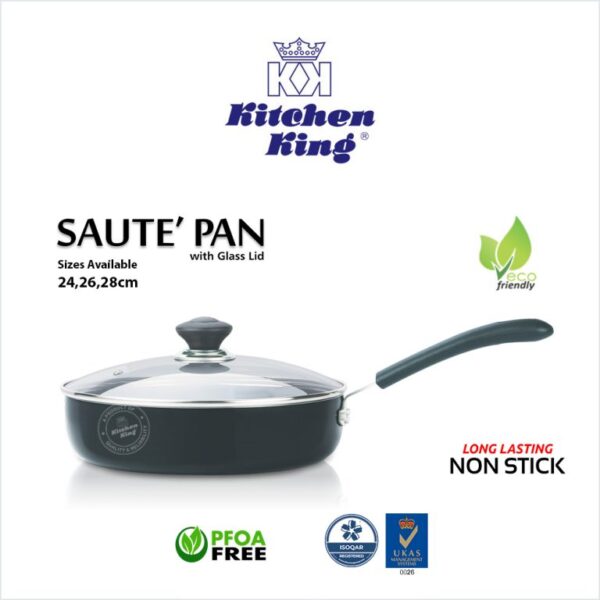
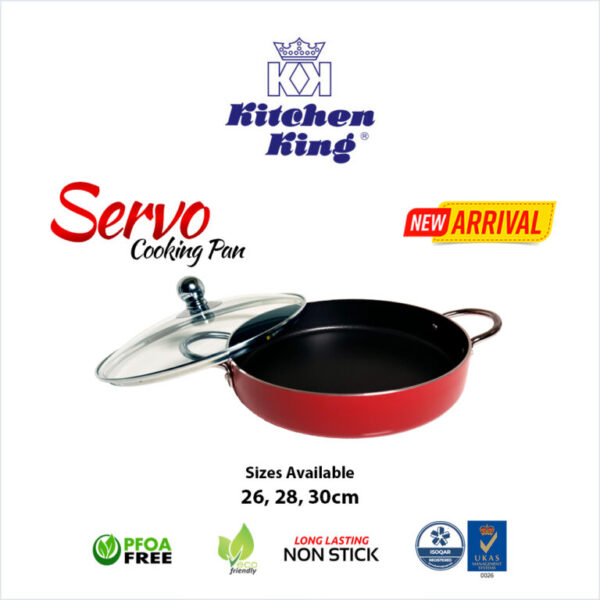
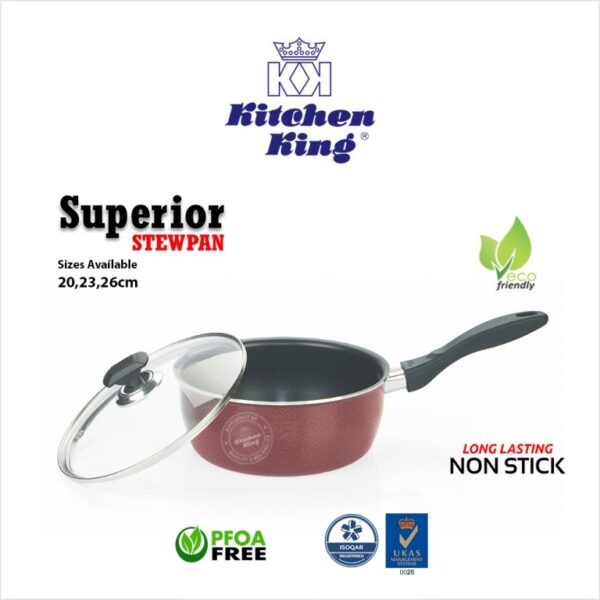
The Milk Pan is a small pan with a pour spout, purpose-built for boiling milk for chai, warming sauces, and small-batch heating without reaching for a full-size pot. The Sauce Pot is a deeper, straight-sided pot designed for reducing gravies and sauces where you need depth more than surface area. The Saute Pan has wider, sloped sides — built for quick, high-heat tossing and stirring where you need to move ingredients around the pan easily. The Servo Pan is our stove-to-table piece, with an elegant glass lid designed to go straight from cooking to serving at the dining table. And the Stew Pan has deeper sides for slow-simmered, liquid-heavy dishes that need time and containment rather than surface heat.
All non-stick pots and pans are manufactured from heavy-gauge food-grade aluminium with Kitchen King's PFOA-free nonstick coating, ISO 9001:2015 certified, and compatible with gas and electric glass stovetops.
Not sure which one you need? If you're making thin flatbreads or crepes, choose the Crepe Pan. If you need to boil milk for chai daily, choose the Milk Pan. If you're reducing a gravy or sauce, choose the Sauce Pot. If you're tossing vegetables or meat quickly, choose the Saute Pan. If you want a pan that looks good enough to serve from directly, choose the Servo Pan.
FAQs:
Q: What is the difference between a Saute Pan, Sauce Pot, and Stew Pan?
A: The Saute Pan has wide, sloped sides for quick tossing and high-heat cooking. The Sauce Pot is deeper with straight sides, built for reducing gravies and sauces. The Stew Pan has the deepest sides of the three, designed for slow-simmered, liquid-heavy dishes. If you're tossing quickly, choose Saute; if you're reducing a sauce, choose Sauce Pot; if you're slow-cooking a stew, choose Stew Pan.
Q: What's the difference between a Crepe Pan and a Tawa?
A: They look similar but serve slightly different purposes. A Crepe Pan has a flat, low-sided design specifically for thin batters like crepes, pan cakes and dosa. A Tawa is typically used for roti and paratha and may have a very slightly different heat profile. For crepes and dosa specifically, the Crepe Pan's low sides make flipping easier.
Q: Is the Milk Pan only for milk?
A: No — while it's most commonly used for boiling milk and making tea (chai), the Milk Pan's small size and pour spout also make it ideal for warming soups, making small-batch sauces, and any quick heating task that doesn't need a full-size pot.
Q: Can I use the Grill Pan on a regular gas stove?
A: Yes. The Grill Pan is designed for standard gas burners and electric glass stovetops — no outdoor grill or charcoal needed to get the ridged char-mark effect.